ABOUT
The paintings may know more than they tell
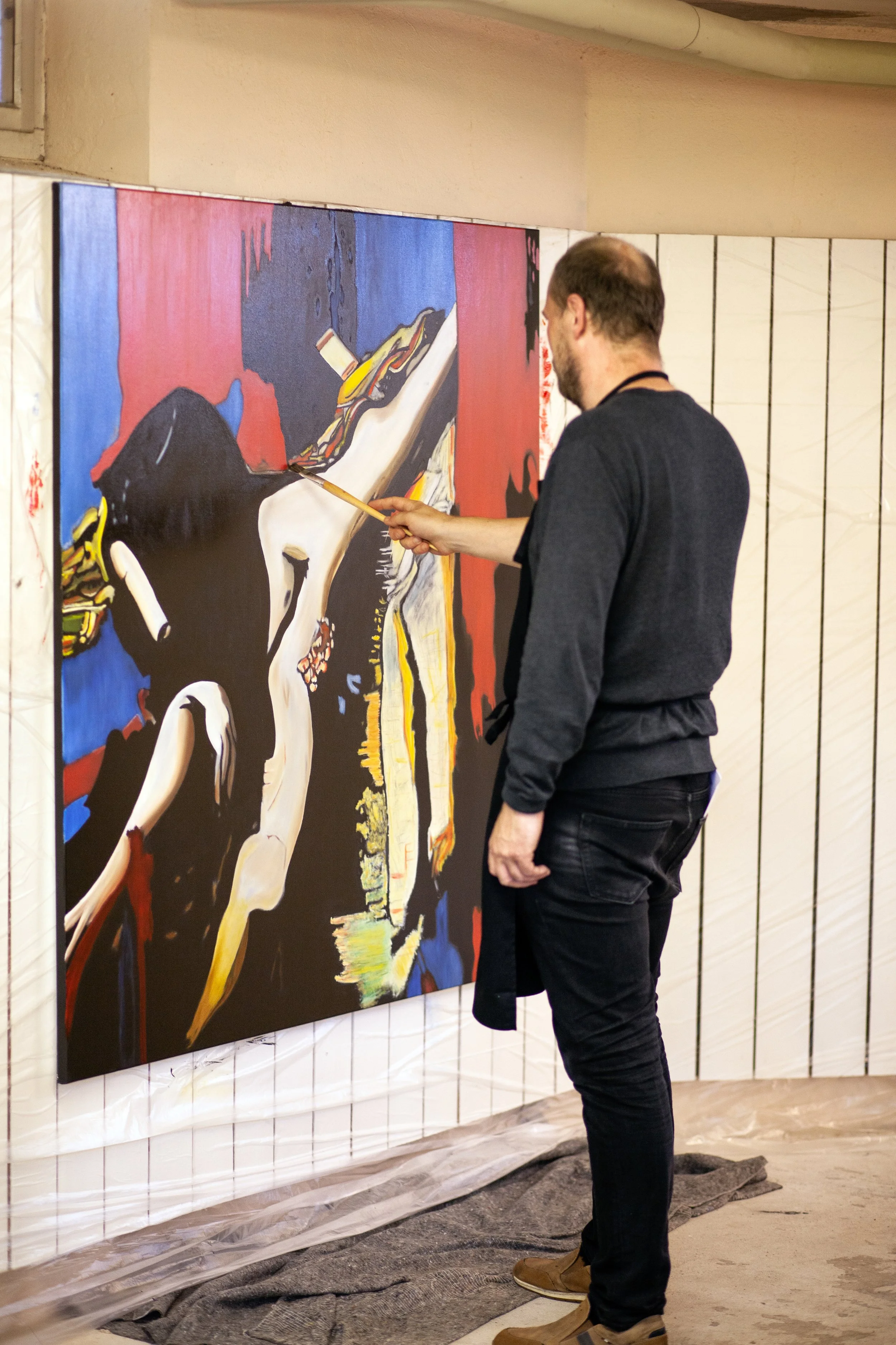
They are in many ways anachronisms, disjointed from time. There are distant echoes of Renaissance and Baroque painting: theatrical arrangements of bodies, dramatic contrasts, drapery and the suggestion of events larger than the moment depicted. But these references belong to images that are deliberately difficult to place in either time or space. Familiar elements are removed from familiar contexts, leaving scenes that seem to contain a logic of their own — one that remains just beyond reach. Although there seem to be suggestions of an underlying narrative, the artworks are not understandable in a literary sense. Nor do they make any moral judgements or offer any opinions. They resist being solved, decoded and distilled into simple language or a simple idea.
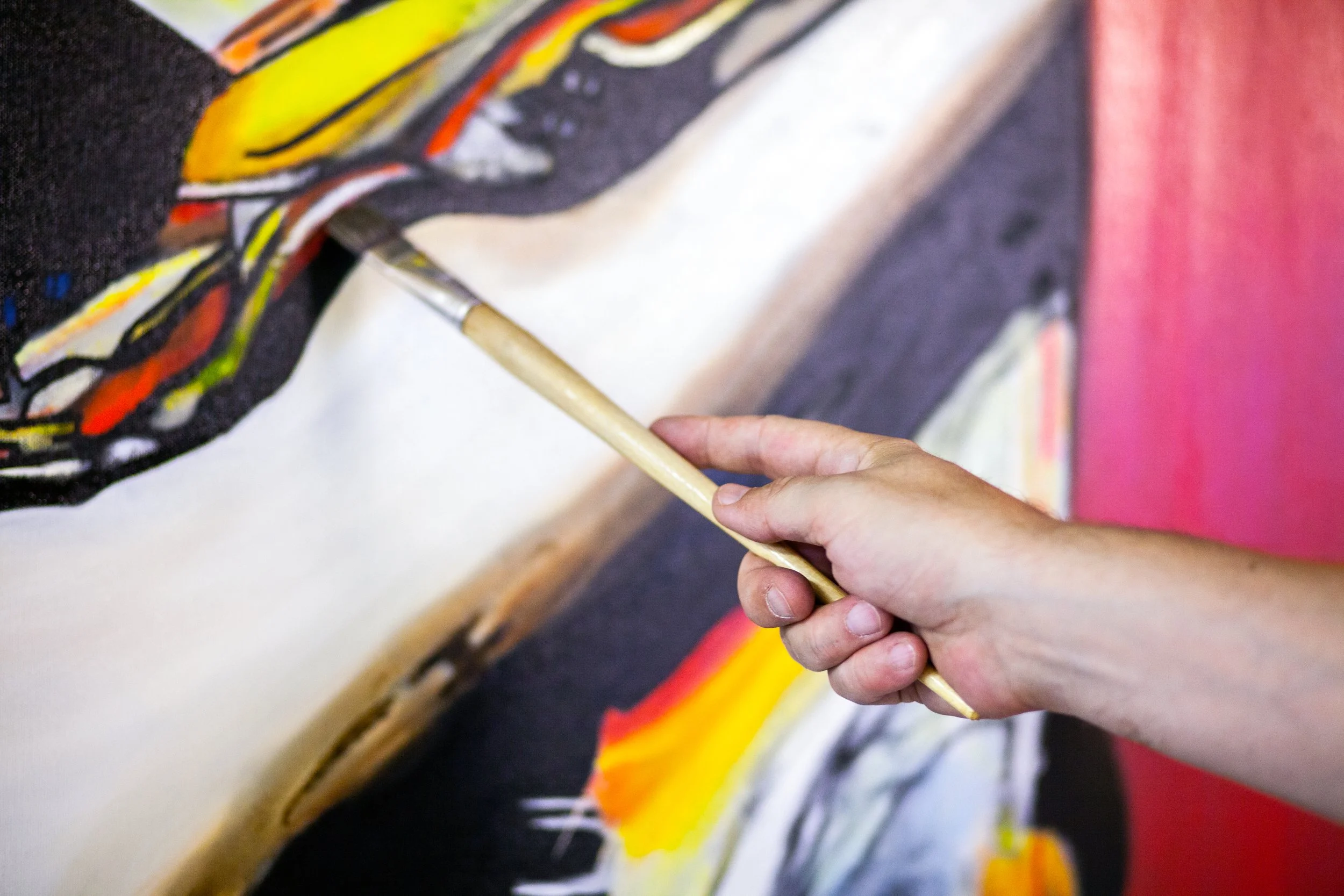
The paintings exist at a point of tension between abstraction and figuration. Recognisable forms emerge from arrangements of colour, shape and surface, only to threaten to dissolve into them again. Spatial dividers, reminiscent of architecture, textiles or natural structures, introduces an unexpected depth into the compositions. Pictorial space is often built from overlapping planes, almost like cut-outs placed at different distances. Depth exists between these planes, while individual forms sometimes refuse to remain within them, shifting between flatness, volume and recognition.
Questions of power and powerlessness recur. Who has agency, who is acted upon, and who merely stands by? Roles are unstable. A witness may become implicated; a passive figure may hold power. Even the viewer's status as detached observer may become unstable. Paradoxes, ambiguity and improbable juxtapositions are preserved.
On revisiting a painting, it may seem to have changed. The painting has not.